
Mexico faces Japan in a fascinating international friendly encounter. El Tri meets Samurai Blue in this intercontinental showcase. Two distinct football philosophies collide on neutral ground. This comprehensive preview covers the mexico national football team vs japan national football team lineups in complete detail. We'll analyze formations and tactical approaches from both nations. Discover how contrasting styles create tactical intrigue. Technical brilliance meets physical prowess. Get ready for an authentic showcase of international football excellence from CONCACAF and AFC powerhouses.
Mexico vs Japan: International Friendly Details
Fixture Information
Date: Saturday, September 6, 2025 Kickoff Time: 7:00 PM PT / 10:00 PM ET / 10:00 AM JST (September 7) Venue: Oakland Coliseum, Oakland, California Competition: International Friendly Capacity: 63,000 expected attendance Weather: Clear evening conditions in Northern California
Match Context and Significance
This friendly serves crucial World Cup preparation purposes. Both nations tune their squads ahead of the 2026 World Cup. Mexico co-hosts next summer with USA and Canada. Japan seeks their first World Cup quarter-final appearance. Testing squad depth remains a priority for both managers. Player evaluation continues in competitive environment. Building team chemistry matters significantly. Historic rivalry grows through limited encounters.
Current Form Analysis
Mexico Recent Form: El Tri enjoyed a dominant 2025 campaign. They won the CONCACAF Nations League in March. Mexico claimed the Gold Cup title in July. Raúl Jiménez scored in both finals. Javier Aguirre's tactical organization impressed throughout. The team hasn't lost since his return. Defensive solidity characterizes their recent performances.
Japan Recent Form: Samurai Blue cruised through World Cup qualifying. They won 13 of 16 Asian qualifying matches. Japan scored 54 goals while conceding only three. Hajime Moriyasu's side showed attacking prowess. The team dominated Asian competition thoroughly. European-based players elevate their quality significantly.
Historical Context
Mexico and Japan played six times since 2005. Mexico won five of those encounters. Japan claimed victory in their first meeting. The most recent match occurred in November 2020. Japan won 2-0 in Austria on that occasion. Both teams earned World Cup qualification regularly. The competitive balance shifted toward Japan recently. Mutual respect characterizes this developing rivalry.
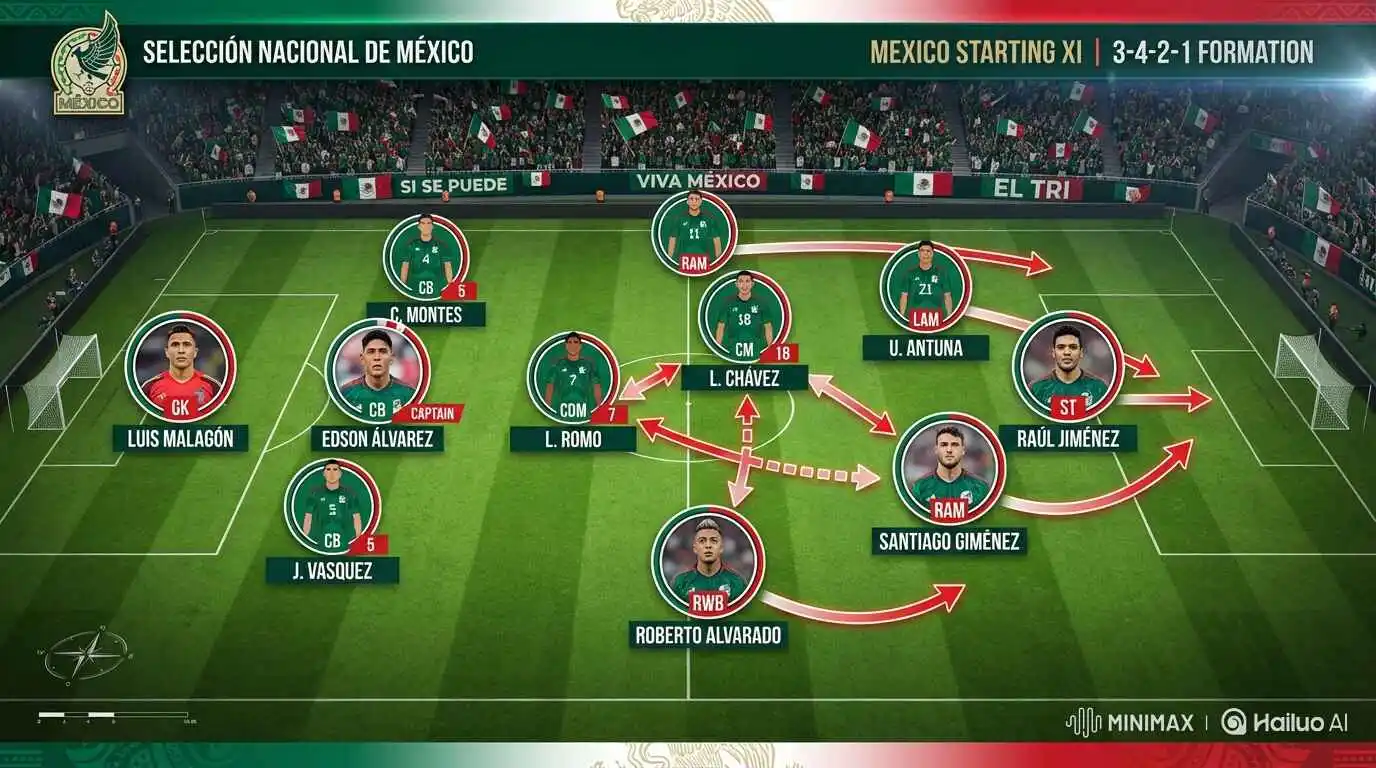
Mexico National Football Team Starting Lineup
Mexico Formation and Starting XI
Formation: 4-3-3 (flexible possession system)
Starting Lineup:
Goalkeeper:
- Luis Malagón (Club América) - Mexico's current number one brings reliability and distribution quality.
Defenders:
- Jorge Sánchez (FC Porto) - Right-back offering European experience
- César Montes (Almería) - Center-back providing defensive organization
- Johan Vásquez (Genoa) - Left center-back with Serie A quality
- Jesús Gallardo (Monterrey) - Left-back combining defense and attack
Midfielders:
- Edson Álvarez (West Ham United) - Captain anchoring midfield with Premier League quality
- Marcel Ruiz (Santos Laguna) - Central midfielder providing energy
- Orbelín Pineda (AEK Athens) - Creative midfielder orchestrating attacks
Forwards:
- Alexis Vega (Toluca) - Left winger with technical ability
- Raúl Jiménez (Fulham) - Veteran striker leading the attack
- Roberto Alvarado (Guadalajara) - Right winger offering pace and creativity
Mexico Key Players Analysis
Raúl Jiménez (Veteran Striker)
The Fulham forward leads Mexico's attacking line with authority. He scored seven goals in 2025 already. Jiménez netted in both Nations League and Gold Cup finals. His hold-up play brings teammates into attacks seamlessly. Clinical finishing remains his trademark quality. At 34, his experience proves invaluable for El Tri. The veteran climbs toward Javier Hernández's scoring record. His Premier League form translates to national team success.
Edson Álvarez (Defensive Leader)
West Ham's midfielder captains Mexico from deep positions. His Premier League experience elevates the entire team. Álvarez reads the game with exceptional intelligence. Ball-winning abilities disrupt opponent attacks effectively. Distribution quality starts Mexico's attacking transitions. Leadership qualities inspire younger teammates around him. The captain provides defensive stability throughout matches.
Hirving "Chucky" Lozano (Impact Player)
PSV Eindhoven's winger returned after extended absence. His pace and directness threaten any defense. Lozano's goal-scoring ability from wide positions matters. European experience at the highest levels shows. Quick feet in tight spaces unlock defensive blocks. The 29-year-old represents Mexican attacking tradition. His availability strengthens El Tri significantly.
Alexis Vega (Creative Force)
Toluca's playmaker provides technical quality and vision. Vega's dribbling ability creates space for teammates. He combines effectively with Jiménez and Alvarado. Set-piece delivery threatens from dead-ball situations. Liga MX form carried into national team duty. Creativity from the left wing position matters.
Mexico Team News
Squad Notes: Guillermo Ochoa absent despite legendary status. Luis Chávez recovering from ACL injury sustained earlier. Gilberto Mora, 16-year-old sensation, joins U-20 World Cup instead. Diego Lainez returns after lengthy absence. Full squad health otherwise available.
Tactical Approach: Aguirre prioritizes defensive organization first. Quick transitions exploit opposition spaces. Width from fullbacks creates attacking opportunities. Jiménez provides focal point for attacks. Midfield control through Álvarez essential. Physical presence matches Japan's technical game. Counter-pressing disrupts opponent rhythm.
Squad Depth: Santiago Giménez provides striking alternative. Henry Martín offers Liga MX goal-scoring. Uriel Antuna adds wide attacking threat. Luis Romo brings midfield energy. European-based and Liga MX balance.
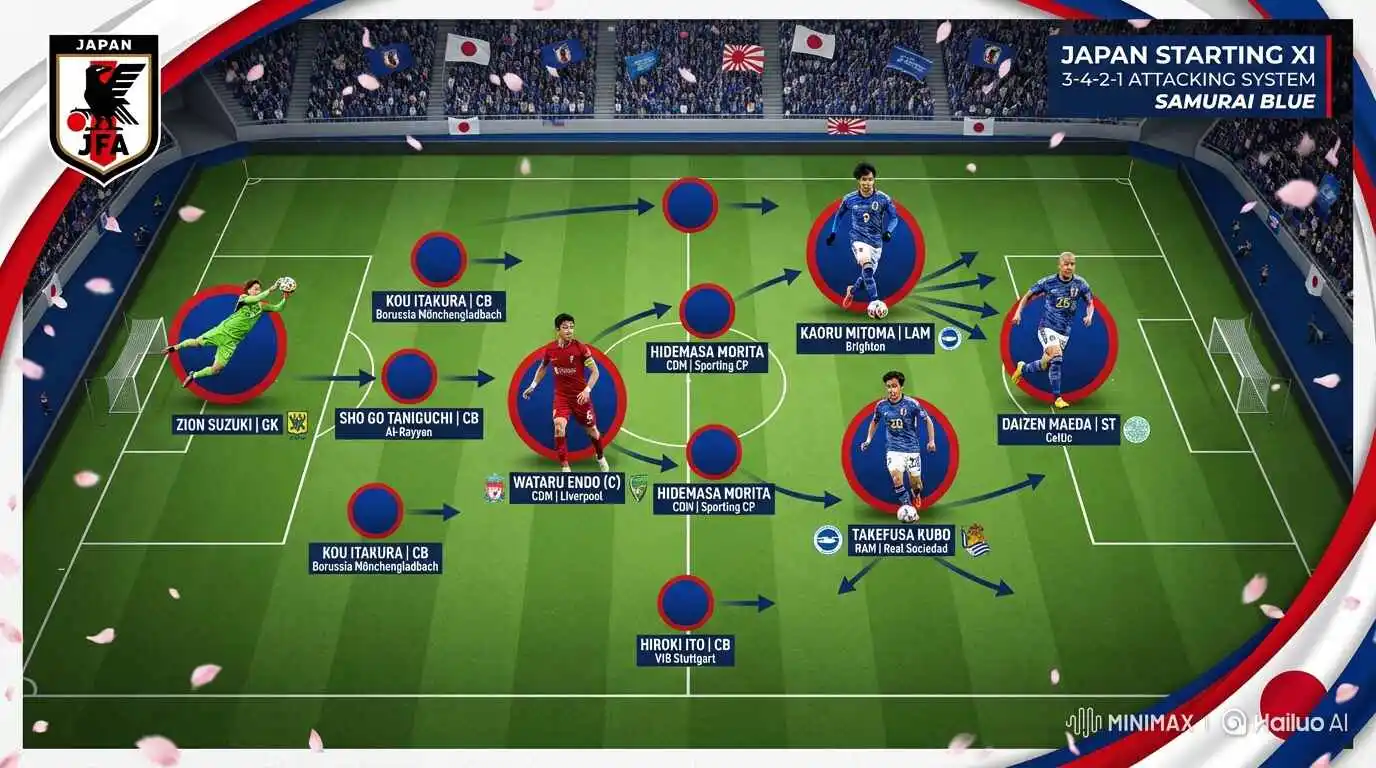
Japan National Football Team Starting Lineup
Japan Formation and Starting XI
Formation: 3-4-2-1 (flexible attacking system)
Starting Lineup:
Goalkeeper:
- Zion Suzuki (Parma Calcio) - US-born goalkeeper bringing modern shot-stopping.
Defenders:
- Ko Itakura (Borussia Mönchengladbach) - Right center-back with Bundesliga pedigree
- Tsuyoshi Watanabe (Standard Liège) - Central defender providing organization
- Ayumu Seko (Cerezo Osaka) - Left center-back combining domestic and Asian experience
Wing-Backs:
- Yukinari Sugawara (AZ Alkmaar) - Right wing-back offering attacking width
- Koki Machida (Union Berlin) - Left wing-back providing defensive discipline
Midfielders:
- Wataru Endo (Liverpool) - Captain anchoring midfield with Champions League quality
- Koki Sano (Mainz 05) - Central midfielder offering Bundesliga experience
Attacking Midfielders:
- Takefusa Kubo (Real Sociedad) - Right attacking midfielder with La Liga quality
- Kaoru Mitoma (Brighton & Hove Albion) - Left attacking midfielder bringing Premier League brilliance
Striker:
- Daizen Maeda (Celtic) - Forward providing pace and work rate
Japan Key Players Analysis
Kaoru Mitoma (Premier League Star)
Brighton's left winger showcases exceptional dribbling ability. His explosive pace terrorizes Premier League defenses weekly. Mitoma's 1v1 success rate ranks among Europe's best. Technical brilliance combines with tactical intelligence. Goal-scoring threat from wide positions proven. The 27-year-old represents Japan's modern attacking identity. His performance against Mexico's right side crucial.
Wataru Endo (Captain and Leader)
Liverpool's midfielder brings Champions League experience to Samurai Blue. The captain wins his 71st senior international cap. Defensive organization stems from his positioning. Ball-winning abilities protect Japan's back three. Distribution quality initiates attacking transitions effectively. Leadership inspires confidence throughout the team. Premier League demands prepared him perfectly.
Takefusa Kubo (Creative Genius)
Real Sociedad's attacking midfielder provides technical wizardry. His La Liga experience shows in every touch. Vision and passing range unlock tight defensive blocks. Dribbling ability in confined spaces exceptional. Goal-scoring capacity from distance threatens opponents. At 24, he represents Japan's golden generation. Creativity between the lines matters significantly.
Takehiro Tomiyasu (Defensive Versatility)
Arsenal defender offers Premier League quality when selected. His versatility allows position flexibility throughout. Defensive solidity combined with composure on ball. Reading of game prevents dangerous situations. Experience at highest European level shows. Leadership qualities strengthen defensive organization.
Japan Team News
Squad Notes: Fully European-based squad demonstrates quality depth. Hajime Moriyasu deployed consistent back three system. Youth integration continues with young talents. No major injury concerns entering friendly. Rotation possibilities allow experimentation.
Tactical Approach: Moriyasu emphasizes technical possession football. Quick passing triangles break down defenses. High pressing system forces opponent mistakes. Compact defensive shape when out of possession. Width from wing-backs stretches play effectively. Patient build-up creates quality chances. European tactical influence evident throughout.
Squad Depth: Ritsu Doan (SC Freiburg) provides wide alternative. Daichi Kamada (Crystal Palace) offers creative spark. Junya Ito (Stade de Reims) brings pace option. Takumi Minamino (AS Monaco) adds attacking quality. Bundesliga and Premier League depth remarkable.
Mexico vs Japan: Clash of Styles
Formation and Philosophy Comparison
Mexico's Approach: El Tri combines Latin American flair with tactical discipline. Physical presence throughout the team structure. Direct play mixed with technical combination sequences. Width from fullbacks creates crossing opportunities. Jiménez provides focal point for attacks. Counter-attacking remains a core strength. Individual brilliance creates decisive moments.
Japan's Philosophy: Samurai Blue emphasizes collective technical excellence. Possession-based football controls match tempo. Quick passing triangles dismantle defensive organization. Disciplined pressing forces opponent errors. Patient build-up play creates quality chances. European tactical influence shapes their identity. Collective movement over individual moments.
Key Tactical Battles
Battle 1: Álvarez vs Endo (Midfield Generals)
Two Premier League midfielders command their teams. Both provide defensive organization and leadership. Distribution quality starts attacking transitions effectively. Physical presence disrupts opponent attacks. Tactical intelligence dictates match tempo. This duel determines midfield control significantly.
Battle 2: Sánchez vs Mitoma (Right vs Left)
Mexico's right-back faces Japan's most dangerous attacker. Mitoma's dribbling ability tests defensive positioning. Sánchez's Porto experience prepares him well. 1v1 situations favor the Brighton star potentially. Defensive discipline required from Mexico's fullback. This battle could determine match outcome.
Battle 3: Jiménez vs Japan's Back Three
Veteran striker tests Japan's defensive organization. Hold-up play brings Mexican teammates forward. Movement between defenders creates space. Japan's Bundesliga defenders know his strengths. Physical duel with tactical nuance. Clinical finishing could decide tight encounter.
Battle 4: Possession Control
Japan typically dominates possession statistics. Mexico comfortable defending and countering. Technical superiority versus defensive organization. Patience versus directness. European influence on both approaches. Tactical discipline determines success.
Strategic Considerations
Mexico's Advantages: Physical superiority throughout the squad. Height advantages on set-pieces. Counter-attacking speed with Lozano. Home crowd support in California. Tournament-winning confidence. Aguirre's defensive organization proven.
Japan's Advantages: Technical superiority player-for-player. Possession control capabilities. Pressing system forces errors. Entirely European-based squad quality. Tactical discipline throughout. Collective movement exceptional.
Contrasting Football Cultures
Mexican Football Identity: Passion and emotional intensity define El Tri. Technical skill combined with physical presence. Individual moments of brilliance celebrated. Latin American heritage influences style. Flair and creativity valued highly. Loyal diaspora support worldwide.
Japanese Football Philosophy: Discipline and collective approach characterize Samurai Blue. Technical development prioritized systematically. European integration extremely successful. Tactical intelligence emphasized throughout. "Samurai spirit" dedication to excellence. Rapid improvement trajectory inspiring.
Mexico vs Japan Historical Record
Overall Head-to-Head
The mexico vs japan lineups history shows interesting dynamics. Total matches played: 6 encounters since 2005. Mexico wins: 5 victories historically. Japan wins: 1 victory (most recent 2020). Draws: 0 matches. Mexico scored 8 goals total. Japan scored 4 goals total. Recent form favors Japan slightly.
Notable Previous Encounters
November 2020 - Austria: Japan 2-0 Mexico in international friendly. Kento Hashimoto and Musashi Suzuki scored. Japan dominated possession throughout match. Mexico fielded rotated squad. This remains Japan's only victory. Significant psychological boost for Samurai Blue.
Confederations Cup 2005: Mexico 2-1 Japan in Germany. El Tri claimed victory in tournament encounter. Both teams competed at high level. Tournament context elevated significance.
Olympic Games Encounters: Youth level meetings occurred historically. Development of future national team stars. Competitive balance at youth level.
Competitive Balance Analysis
Mexico traditionally dominated this fixture historically. Japan's 2020 victory shifted momentum noticeably. Both teams regularly qualify for World Cups. Mutual respect characterizes encounters. Friendly nature allows experimentation typically. European-based players elevated both squads. Growing football relationship benefits both nations.
European Influence on Both Squads
Mexico's European Contingent
Premier League Stars: Edson Álvarez brings West Ham experience. Raúl Jiménez adds Fulham quality. English football intensity prepares them well. Physical demands strengthen their games.
Other European Leagues: Jorge Sánchez (Porto - Primeira Liga). Johan Vásquez (Genoa - Serie A). César Montes (Almería - La Liga). Orbelín Pineda (AEK Athens - Greek League). European adaptation raising overall level.
Japan's European Excellence
Premier League Quality: Kaoru Mitoma (Brighton). Takehiro Tomiyasu (Arsenal). Wataru Endo (Liverpool). Daichi Kamada (Crystal Palace). English football influence significant.
Bundesliga Contingent: Ko Itakura (Borussia Mönchengladbach). Ritsu Doan (SC Freiburg). Koki Sano (Mainz 05). German tactical discipline evident. Bundesliga experience valuable.
Other Top Leagues: Takefusa Kubo (Real Sociedad - La Liga). Takumi Minamino (AS Monaco - Ligue 1). Yukinari Sugawara (AZ Alkmaar - Eredivisie). Broad European exposure exceptional.
Shared European Experience
Both nations export talent successfully to Europe. Quality elevation through competitive exposure. Tactical sophistication develops naturally. Physical preparation year-round essential. International standard raised significantly. European experience shapes modern approaches. This friendly showcases European influence clearly.
Bench Strength and Squad Options
Mexico's Substitutes
Key Bench Players: Santiago Giménez (Feyenoord) - European-based striker. Henry Martín (Club América) - Liga MX goal-scorer. Hirving Lozano (PSV) - If not starting, game-changer. Uriel Antuna (Tigres UANL) - Wide attacking option. Luis Romo (Monterrey) - Midfield energy. Érik Sánchez (Pachuca) - Young talent.
Depth Analysis: European and Liga MX balance maintained. Experience mixed with youth development. Tactical flexibility through substitutions. Game-changing potential available. Fresh legs crucial in final third.
Japan's Bench Options
Key Substitutes: Takumi Minamino (AS Monaco) - Creative attacking midfielder. Daichi Kamada (Crystal Palace) - Premier League quality. Ritsu Doan (SC Freiburg) - Bundesliga winger. Junya Ito (Stade de Reims) - Pace and directness. Ayase Ueda (Feyenoord) - Striking alternative. Hidemasa Morita (Sporting CP) - Midfield control.
Depth Analysis: Entirely European-based options remarkable. No quality drop-off available. Multiple tactical alternatives ready. Experience throughout bench. Youth and veteran balance.
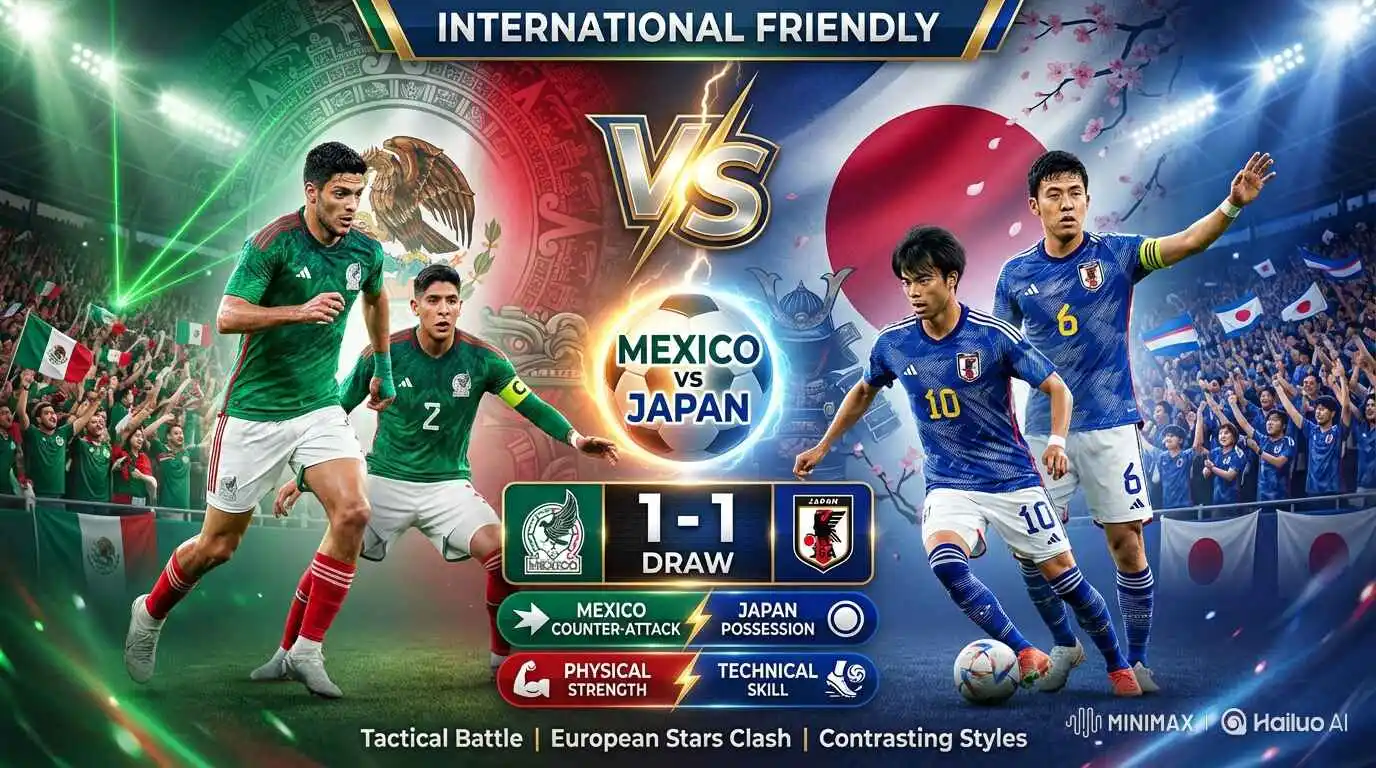
Mexico vs Japan: Preview and Prediction
Expected Outcome
Both teams enter with quality European-based players. Contrasting styles create tactical intrigue. Friendly nature allows squad experimentation. Japan's technical game faces Mexico's physicality. Neither team risks star players unnecessarily. Competitive but respectful encounter expected.
Score Prediction
Most Likely Result: Mexico 1-1 Japan Alternative Scenarios: 2-1 either direction possible
Japan may dominate possession statistics. Mexico dangerous on counter-attacks throughout. Both teams likely to score. Low-scoring tactical affair expected. Draw represents realistic outcome. Quality determines tight moments.
Keys to Victory
For Mexico: Defensive organization against possession. Counter-attacking efficiency crucial. Set-piece execution matters. Jiménez's clinical finishing. Physical presence in duels. Lozano's pace exploitation.
For Japan: Possession control dominance. Technical superiority expressed. Mitoma's 1v1 success. Patient build-up creating chances. Pressing system forcing errors. Collective movement unlocking defense.
X-Factors
Substitution timing affects outcome significantly. Individual brilliance from stars possible. Set-piece execution could decide result. Tactical adjustments during match. Fresh legs in final 30 minutes. Friendly experimentation impacts result.
How to Watch Mexico vs Japan
TV Broadcast Information
United States:
- ESPN2 (English broadcast)
- TUDN (Spanish language)
- Univision networks (Spanish)
Mexico:
- Azteca Deportes
- TUDN Mexico
- Canal 5 (free-to-air)
- TV Azteca networks
Japan:
- DAZN Japan
- NHK (national broadcaster)
- TV Asahi sports coverage
- AbemaTV streaming
International:
- ESPN+ (various regions)
- Regional sports networks
- Official federation channels
Streaming Options
- ESPN+ (USA subscribers)
- FuboTV (live streaming)
- Sling TV (sports package)
- ViX (Spanish language)
- DAZN (multiple regions)
- Paramount+ (select areas)
Kickoff Times
- Pacific Time: 7:00 PM
- Eastern Time: 10:00 PM
- Mexico City Time: 9:00 PM CT
- Japan Standard Time: 10:00 AM (September 7)
- UTC/GMT: 2:00 AM (September 7)
Two Footballing Cultures Collide
Mexican Football Identity
El Tri represents passionate football tradition. Technical skill combines with physical presence. Individual brilliance moments celebrated nationally. Proud CONCACAF dominance historically. World Cup regulars since 1994. Diaspora support creates global fanbase. Latin American heritage influences style deeply.
Japanese Football Philosophy
Samurai Blue embodies discipline and organization. Technical development prioritized systematically. Collective mentality over individual stars. European integration remarkably successful. Asian dominance established firmly. Rapid improvement inspiring globally. "Samurai spirit" dedication to excellence.
Mutual Respect and Learning
Both nations respect each other's achievements. Different development paths toward same goal. Learning opportunities through competition. World Cup ambitions unite them. Football development models differ. Cultural exchange strengthens international football. Growing relationship benefits both nations.
Anticipating Mexico vs Japan
The mexico national football team vs japan national football team lineups showcase contrasting philosophies beautifully. El Tri's physical presence meets Samurai Blue's technical excellence. European experience shapes both squads significantly. Jiménez leads Mexico's attacking line expertly. Mitoma provides Japan's creative spark brilliantly. This friendly offers tactical fascination throughout. Both teams prepare for 2026 World Cup together. World-class talent fills both starting XIs. The mexico japan starting xi promise entertaining football. Respect and competition combine perfectly tonight.
Which style will prevail: Mexico's flair or Japan's precision? Share your prediction! Who's your player to watch in this intercontinental clash?
Frequently Asked Questions
What is the head-to-head record between Mexico and Japan?
Mexico leads the historical record with 5 wins from 6 total meetings since 2005. Japan won their only victory in November 2020, defeating Mexico 2-0 in Austria. The mexico national football team vs japan national football team lineups have produced no draws historically. Mexico scored 8 goals total while Japan scored 4. Despite Mexico's historical dominance, Japan's recent victory and European-based squad quality suggest growing competitive balance between these nations.
Which players should I watch in Mexico vs Japan?
For Mexico, watch Raúl Jiménez who scored in both 2025 tournament finals. Captain Edson Álvarez provides Premier League quality in midfield. Hirving Lozano's pace threatens any defense. For Japan, Kaoru Mitoma brings Brighton brilliance and explosive dribbling. Liverpool's Wataru Endo captains Samurai Blue with defensive excellence. Takefusa Kubo provides La Liga creativity from Real Sociedad. The mexico vs japan lineups feature exceptional European-based talent throughout both squads.
What formation does Japan use against Mexico?
Japan typically deploys a 3-4-2-1 formation under manager Hajime Moriyasu. This system features three center-backs providing defensive stability. Wing-backs push high creating attacking width. Two attacking midfielders support a lone striker. The mexico japan starting xi shows Japan's tactical flexibility. Wataru Endo anchors midfield defensively. Kaoru Mitoma and Takefusa Kubo operate as creative forces. This formation allows possession control while maintaining defensive organization against counter-attacks.
Where can I watch the Mexico vs Japan international friendly?
In the United States, the match broadcasts on ESPN2 in English and TUDN/Univision in Spanish. Mexican viewers access via Azteca Deportes, TUDN, and Canal 5 free-to-air. Japanese fans watch on DAZN Japan, NHK, and TV Asahi. Streaming options include ESPN+, FuboTV, and ViX for Spanish language. The mexico japan team news appears 60-90 minutes before kickoff. Check local listings for specific channel availability in your region.
When did Mexico and Japan first play each other?
Mexico and Japan first met in 2005 during the FIFA Confederations Cup in Germany. Mexico won that inaugural encounter 2-1. Since then, they've played five more times with Mexico winning four additional matches. Japan claimed their first victory in November 2020, winning 2-0 in a friendly match in Austria. The mexico vs japan lineups have evolved significantly over two decades. Both nations consistently qualify for World Cups and field European-based players regularly now.