

Real estate investing builds generational wealth through strategic property acquisition. This proven path to financial freedom offers multiple income streams and tax advantages. Whether you're starting with modest capital or significant resources, real estate investing provides opportunities at every level. This comprehensive guide covers everything from fundamental concepts to advanced strategies. You'll discover proven methods for building a profitable real estate portfolio. Learn how to analyze properties, secure financing, and manage investments effectively. Real estate investing for beginners starts with education and clear action steps. Strategic property investment creates lasting prosperity. Begin your wealth-
building journey with confidence today.
Let's explore the fundamentals of successful investing in real estate.
Understanding Real Estate Investing
Definition and Core Concepts
Real estate investing means purchasing property to generate profit over time. Investors earn rental income from tenants who pay monthly rent. Properties build equity through market appreciation and mortgage paydown. This creates passive income streams that grow wealth consistently. Leverage allows investors to control valuable assets with borrowed capital. Tax advantages provide deductions unavailable in most other investments. Long-term wealth accumulation happens through strategic property acquisition and management.
Why Real Estate Investing Works
Real estate offers tangible assets with intrinsic value. Multiple revenue streams include rental income, appreciation, and tax benefits. Properties provide inflation hedge protection as rents increase with living costs. Tax benefits substantially reduce taxable income through depreciation deductions. Leverage amplifies returns by controlling properties worth more than your initial investment. Consistent cash flow potential creates predictable monthly income. Appreciation builds wealth over time as property values increase in growing markets.
Real Estate vs Other Investments
Real estate investing provides more control than stock market investments. Physical assets can be improved to force appreciation through renovations. Tax advantages exceed those available in stocks or bonds. Leverage opportunities allow 80-90% financing of property value. Predictable cash flow comes from signed lease agreements. Lower volatility than stocks means steadier returns. Forced appreciation through improvements increases property value directly.
Real Estate Investment Strategies
Residential Rental Properties
Single-Family Homes offer the easiest entry point for real estate investing for beginners. These properties provide steady rental income with simpler management requirements. Single tenant relationships reduce complexity compared to multi-unit properties. Strong appreciation occurs in growing markets with job growth. Lower initial investment makes these accessible to new investors. Single-family homes maintain high demand across market cycles.
Multi-Family Properties include duplexes, triplexes, and apartment buildings. Multiple income streams from one property improve overall returns. Better cash flow potential exists because vacancy in one unit doesn't eliminate all income. Risk diversification across units protects against total income loss. Economies of scale reduce per-unit management costs. Faster portfolio growth happens when one property provides multiple rental incomes.
Commercial Real Estate
Office Buildings feature longer lease terms typical of commercial properties. Higher income potential exists with professional tenants paying above residential rates. Professional tenant relationships create more business-like interactions. More complex management requires greater expertise and experience. Higher capital requirements mean larger down payments and reserves.
Retail Properties include shopping centers and storefronts in high-traffic areas. Triple net leases are common, where tenants pay property expenses. Tenants handle property taxes, insurance, and maintenance costs. Location-dependent success requires careful market selection. E-commerce impact considerations affect retail property performance in 2026.
Industrial Properties encompass warehouses and distribution centers serving growing sectors. Growing demand from e-commerce expansion drives industrial property values. Long-term stable tenants sign multi-year leases reducing turnover. Lower management intensity compared to residential properties. Supply chain reshoring trends increase domestic warehouse demand.
Alternative Investment Methods
REITs (Real Estate Investment Trusts) provide stock market real estate exposure without property ownership. No property management required makes these truly passive investments. High liquidity allows buying and selling like stocks. Dividend income provides regular distributions from property cash flows. Lower capital requirements allow investing with small amounts. Instant diversification across multiple properties and markets.
Real Estate Crowdfunding uses pooled investment platforms connecting investors to deals. Lower minimum investments range from $500 to $5,000 typically. Access to commercial deals previously available only to wealthy investors. Platform handles management and due diligence for investors. Various risk levels accommodate different investor profiles.
Real Estate Wholesaling involves contract assignment strategy with minimal capital required. Quick transaction turnaround provides fast returns on deal-finding efforts. Market knowledge requirements are high to identify good deals. Deal-finding skills prove essential for consistent wholesaling success. Networking creates pipeline of motivated sellers and cash buyers.
Fix and Flip strategies purchase properties, renovate them, and sell quickly. Higher profit potential per deal exceeds buy-and-hold returns. Renovation expertise requirements include construction knowledge and contractor management. More active management demands significant time investment. Market timing proves critical for maximizing sale prices.

How to Start Real Estate Investing
Essential First Steps
Educate Yourself through multiple learning channels before investing capital. Read real estate investing books from experienced investors like Brandon Turner. Take online courses covering property analysis and management fundamentals. Follow real estate investing news to understand current market conditions. Join local investor groups for networking and learning opportunities. Listen to real estate podcasts during commutes for consistent education. Study successful investor strategies to learn proven approaches. Understand local market dynamics affecting your target investment area.
Assess Your Finances honestly before pursuing investment properties. Check your credit score and aim for 700+ for best financing rates. Calculate available capital including savings and potential investment funds. Determine borrowing capacity based on income and existing debts. Create an investment budget covering down payment, closing costs, and reserves. Establish an emergency fund covering 6-12 months of property expenses. Review your debt-to-income ratio as lenders evaluate this carefully. Plan for closing costs and initial repairs requiring immediate capital.
Choose Your Strategy matching your available capital and skills. Match strategy to available capital and time commitment ability. Consider time commitment ability as some strategies require active management. Assess risk tolerance level honestly before selecting investment approach. Evaluate local market opportunities and property availability. Start with a manageable approach to build experience and confidence. Plan your scaling strategy for growing your portfolio over time.
How to Get Into Real Estate Investing
Network with Professionals who support your investing in real estate goals. Connect with real estate agents specializing in investment properties. Find experienced investors willing to share knowledge and insights. Build lender relationships before needing financing for better terms. Meet property managers to understand rental management operations. Join real estate investment associations for educational events and connections. Attend local meetups to expand your investor network. Find mentorship opportunities with seasoned investors in your market.
Conduct Market Research systematically before making purchase decisions. Study neighborhood trends affecting property values and rents. Analyze comparable properties to understand pricing dynamics. Understand rental rates through extensive market research and listings. Research economic indicators like employment growth and population trends. Track inventory levels to gauge market supply and demand. Monitor days on market statistics revealing seller motivation. Identify emerging areas with growth potential before appreciation accelerates.
Common Beginner Mistakes to Avoid
New investors frequently make costly errors that education prevents. Underestimating expenses leads to negative cash flow surprises. Skipping property inspections exposes you to unexpected repair costs. Overleveraging finances creates vulnerability during market downturns. Ignoring cash flow calculations results in unprofitable investments. Poor location selection limits appreciation and tenant quality. Inadequate due diligence causes avoidable problems after purchase. No exit strategy planned leaves you trapped in bad investments. Emotional decision-making overrides logical financial analysis.
Real Estate Investment Financing Options
Traditional Financing Methods
Conventional Mortgages offer 15-30 year fixed-rate loans for investment properties. Typically 20-25% down payment requirements for non-owner occupied properties. Best rates for qualified borrowers with strong credit and income. Owner-occupied advantages reduce down payment and interest rates. Standard qualification process evaluates credit, income, and assets thoroughly.
FHA Loans require low down payment of just 3.5% for qualified buyers. Owner-occupancy requirement mandates living in the property for one year. House hacking opportunities allow buying multi-family homes and renting units. Multi-family up to 4 units qualify for FHA financing. Lower credit score acceptance helps investors with rebuilding credit.
Portfolio Loans come from banks holding the loan instead of selling it. More flexible qualification criteria benefit experienced investors. Better for multiple properties as conventional loan limits don't apply. Relationship-based lending rewards loyal banking customers. Local community banks often offer portfolio loan programs.
Commercial Loans finance income-producing properties based on cash flow performance. Shorter terms of 5-20 years compared to residential mortgages. Based on property cash flow rather than personal income alone. Higher interest rates typical compared to residential financing. Larger down payments required, usually 25-30% minimum.
Creative Financing Strategies
Seller Financing occurs when the owner acts as lender. Flexible terms are negotiable between buyer and seller directly. Faster closing process without traditional bank underwriting delays. Less stringent qualification for buyers with credit challenges. Win-win situations emerge when sellers want monthly income.
Hard Money Loans provide short-term financing for 6-12 months typically. Property-value based lending cares less about borrower qualifications. Quick approval process completes in days rather than weeks. Higher interest rates of 10-15% reflect increased lender risk. Ideal for fix-and-flip projects requiring speed and flexibility.
Private Money Lenders are individual investors funding real estate deals. Relationship-based terms create flexible lending arrangements. Flexible structure accommodates creative deal structures. Network-dependent availability requires building investor relationships. Various interest arrangements include fixed rates or profit sharing.
Partnerships pool resources combining capital from multiple investors. Share equity and profits according to agreed-upon percentages. Combine skills and capital for larger deals than solo investing. Clear agreement proves essential for preventing partner disputes. Various structure options include general partners and limited partners.
Leveraging Your Investment
Build equity systematically to fund future acquisitions. Use existing equity for next purchase through refinancing or lines of credit. HELOC (Home Equity Line of Credit) provides flexible access to equity. Cash-out refinancing converts equity into investment capital. 1031 exchange benefits allow deferring capital gains taxes. Portfolio leverage strategies compound growth through equity redeployment.
Property Analysis and Due Diligence
Key Financial Metrics
Cash Flow Calculation determines monthly profit after all expenses. Monthly rental income forms the starting point for calculations. Subtract all expenses including PITI (Principal, Interest, Taxes, Insurance), maintenance, vacancy allowance, and property management fees. Positive cash flow proves essential for sustainable real estate investing. Buffer for unexpected costs protects against surprise expenses. Conservative estimates prevent overoptimistic projections causing problems.
Cap Rate (Capitalization Rate) equals Net Operating Income divided by Purchase Price. Compare properties objectively using this standardized metric. Market-dependent benchmarks vary by location and property type. Higher cap rate indicates higher return potential typically. Consider market appreciation trends alongside cap rate analysis.
Cash-on-Cash Return measures Annual cash flow divided by Total cash invested. This metric shows actual money returned on your investment. Typically 8-12% target range for rental properties. Accounts for financing impact unlike cap rate calculations. Year-over-year comparison tracks investment performance over time.
1% Rule suggests monthly rent should equal 1% of purchase price. This quick screening tool helps eliminate poor deals fast. Market-dependent applicability varies by location and property values. Starting point for analysis but not the sole decision factor. Many profitable markets don't meet 1% rule standards.
ROI (Return on Investment) calculates Total profit divided by Total investment. Comprehensive profitability measure including all return sources. Include appreciation when calculating long-term ROI. Consider tax benefits in total return calculations. Long-term wealth indicator more than short-term metric.
Property Evaluation Process
Physical Inspection requires professional home inspection before purchase. Structural integrity assessment identifies foundation and framing issues. System condition evaluation covers HVAC, plumbing, and electrical systems. Roof age and condition affects near-term capital expenditure needs. Foundation evaluation prevents costly structural problems. Identify repair costs for accurate investment projections. Estimate renovation timeline for flip or renovation projects.
Market Analysis establishes property value and rental income potential. Comparable property values show recent sale prices for similar homes. Recent sales data reveals market trends and pricing direction. Rental rate research determines achievable monthly income. Neighborhood trends affect long-term appreciation potential. School district quality impacts property values and tenant demand. Employment centers proximity drives rental demand and stability. Future development plans may increase or decrease values.
Title and Legal Review protects against ownership and legal problems. Title search completion verifies clean ownership chain. Lien verification confirms no outstanding claims against property. Zoning compliance check ensures legal use of property. HOA rules review reveals restrictions and fees. Property tax history shows assessment trends and special assessments. Insurance requirements affect operating costs and feasibility. Permit verification confirms legal improvements and additions.
Making Offers and Negotiations
Craft strong offers balancing competitiveness with profitability. Competitive but profitable pricing wins deals while protecting returns. Include inspection contingencies allowing exit if problems discovered. Negotiate repairs or credits for items found during inspection. Consider seller motivations to structure appealing offers. Flexible closing timelines accommodate seller needs increasing acceptance. Earnest money deposit shows commitment while remaining refundable. Financing contingency protects you if loan approval fails.
Building Your Investment Team
Assemble essential professionals supporting your real estate investing success. Real estate agent specializing in investment properties understands investor needs. Real estate attorney reviews contracts and handles closings properly. Experienced CPA/tax advisor maximizes deductions and tax strategy. Property inspector conducts thorough pre-purchase evaluations. Insurance agent provides appropriate coverage for rental properties. Mortgage broker/lender secures competitive financing terms. Contractors and handymen handle repairs and renovations efficiently. Property manager handles operations if you choose professional management.
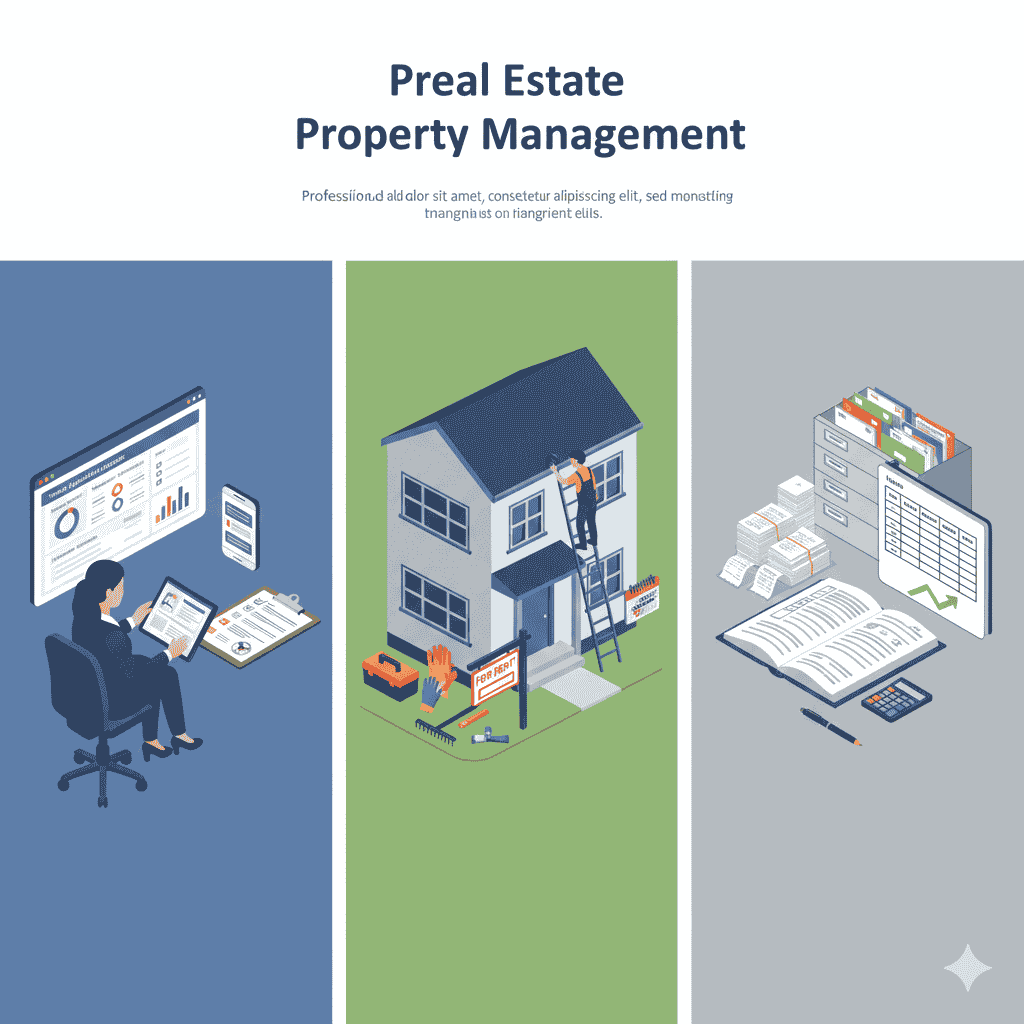
Managing Your Real Estate Investments
Self-Management vs Professional Management
Self-Management Benefits include saving management fees of 8-10% monthly. Direct control over decisions allows immediate responses to situations. Better tenant relationships develop through direct landlord interaction. Learn valuable skills transferable to larger portfolios. Higher profit margins result from eliminated management fees. Suitable for local properties within reasonable driving distance.
Self-Management Challenges demand time-intensive commitment from owners. 24/7 availability required for tenant emergencies and problems. Tenant screening responsibilities fall entirely on owner. Maintenance coordination requires contractor relationships and scheduling. Legal knowledge needed to comply with landlord-tenant laws. Emotional involvement can complicate difficult tenant situations.
Professional Property Management provides experienced tenant screening services. Maintenance network established with reliable contractors and vendors. Legal compliance expertise prevents costly violations and lawsuits. Reduced time commitment frees investors for other priorities. Scale portfolio easier without personal management constraints. Typically 8-10% of rent charged for services rendered.
Tenant Management
Finding Quality Tenants starts with comprehensive application process. Credit and background checks reveal payment history and criminal records. Employment verification confirms income stability and employment status. Previous landlord references provide real-world performance insights. Income requirements typically 3 times monthly rent amount. Clear lease agreements establish expectations and legal protections. Security deposit collection provides funds for potential damages.
Maintaining Tenant Relationships requires prompt maintenance response times. Clear communication channels keep tenants informed and satisfied. Fair and consistent policies treat all tenants equally. Respect tenant privacy rights regarding property access. Address concerns quickly to prevent escalation into problems. Lease renewal incentives reduce turnover costs and vacancy. Professional boundaries maintain respect and proper relationships.
Maintenance and Repairs
Preventive Maintenance includes regular property inspections catching problems early. HVAC servicing extends system life and maintains efficiency. Gutter cleaning prevents water damage and foundation problems. Pest control maintains property condition and tenant satisfaction. Smoke detector checks ensure safety and legal compliance. Seasonal preparations protect properties from weather damage. Landscaping upkeep maintains curb appeal and property values.
Managing Repairs prioritizes emergency vs routine maintenance appropriately. Reliable contractor network ensures quality work at fair prices. Cost-effective solutions balance quality with budget constraints. Tenant communication keeps renters informed about repair timing. Documentation practices create records for taxes and warranty tracking. Budget allocation reserves funds for expected maintenance needs. Warranty tracking captures covered repairs and replacements.
Financial Management
Bookkeeping Essentials maintain organized financial records for taxes. Separate business accounts isolate property finances from personal funds. Track all income and expenses for accurate record-keeping. Receipt organization supports tax deductions and expense verification. Monthly reconciliation catches errors and tracks cash flow. Tax preparation readiness streamlines annual filing process. Professional software use like QuickBooks simplifies bookkeeping tasks. Annual financial reviews assess investment performance objectively.
Advanced Real Estate Investing Strategies
Scaling Your Portfolio
Real estate investing tips for growth include proven scaling methods. BRRRR method (Buy, Rehab, Rent, Refinance, Repeat) accelerates portfolio expansion. Use cash-out refinancing to access equity for new purchases. Leverage equity for acquisitions instead of new capital. Diversify property types across residential and commercial assets. Geographic diversification reduces market-specific risks affecting returns. Systematic property accumulation builds wealth through consistent action. Team building for scale delegates tasks enabling larger operations.
Tax Strategies for Investors
Maximize tax benefits through strategic planning and professional guidance. Depreciation deductions reduce taxable income substantially each year. Mortgage interest deduction lowers tax burden on financed properties. Operating expense deductions include repairs, management, and utilities. 1031 exchange for deferring taxes allows upgrading properties tax-free. Cost segregation studies accelerate depreciation schedules for larger properties. Passive loss deductions offset other passive income sources. Real estate professional status enables deducting losses against active income. Opportunity zone investments provide capital gains tax advantages.
Market Timing Considerations
Understand market cycles affecting property values and opportunities. Buy in buyer's markets when inventory exceeds demand. Recognize overheated conditions suggesting caution with acquisitions. Long-term hold strategy reduces timing risk significantly. Economic indicator monitoring reveals market direction and strength. Local market dynamics matter more than national trends. Avoid trying to time markets perfectly as consistency wins.
Risk Management
Protect your investment through comprehensive risk management strategies. Adequate insurance coverage includes property, liability, and loss of rents. LLC formation consideration provides legal liability protection. Emergency fund maintenance covers unexpected expenses and vacancies. Tenant screening rigor prevents problem tenants causing losses. Regular property inspections catch maintenance issues early. Legal compliance avoids fines, penalties, and lawsuits. Diversification across markets reduces concentration risk. Conservative financial projections prevent overoptimistic expectations.
What Is Passive Real Estate Investing?
Passive Investment Options
REITs (Real Estate Investment Trusts) trade publicly on stock exchanges daily. Dividend-paying investments distribute rental income to shareholders. No property management required for true passive ownership. High liquidity allows selling shares instantly during market hours. Professional management handles property operations and decisions. Diversified property exposure across sectors and locations. Minimum investment low, often just one share price. Tax considerations different as dividends taxed as ordinary income.
Real Estate Syndication pools investor capital for larger commercial deals. Access larger commercial deals beyond individual investor capacity. Passive partner role eliminates management responsibilities completely. Professional sponsors manage properties and distribute returns. Quarterly distributions typical from property cash flows. 5-7 year typical hold periods before property sale. Accredited investor status often required by SEC regulations. Higher minimum investments range from $25,000 to $100,000.
Real Estate Crowdfunding Platforms enable online investment in properties. Various property types available including residential and commercial. Lower minimums of $500-$5,000 make these accessible. Platform vets deals performing due diligence for investors. Equity or debt positions offer different risk-return profiles. Geographic diversification easy across multiple markets. Platform fees apply, typically 1-2% annually. Varying liquidity terms from liquid to multi-year holds.
Turnkey Rental Properties come fully renovated and tenanted. Out-of-state investment option enables geographic diversification. Property management included in turnkey arrangements. Higher purchase price reflects renovation and tenant placement work. Immediate cash flow starts from day one of ownership. Less hands-on involvement than traditional rental investments. Due diligence still essential despite turnkey status.
Passive vs Active Investing
Compare approaches based on your goals and resources. Time commitment differences range from hours monthly to hours daily. Control level variations affect decision-making authority and flexibility. Return expectations typically higher for active management. Risk profiles differ with passive offering more diversification. Capital requirements vary significantly between strategies. Tax implications differ based on investment structure. Scaling potential greater with passive strategies. Personal preference alignment determines optimal strategy choice.
Choosing Passive Investments
Due Diligence Steps protect capital in passive investments. Research platform/sponsor track record examining previous deals. Review offering documents thoroughly understanding all terms. Understand fee structures impacting net returns significantly. Evaluate projected returns realistically with conservative assumptions. Check minimum investment requirements against available capital. Consider liquidity needs and investment lock-up periods. Verify regulatory compliance and proper licensing. Diversify across opportunities reducing concentration risk.
Real Estate Investing News and 2026 Outlook
Market Conditions
Housing market trends in 2026 show evolving dynamics. Interest rate environment affects affordability and investment returns. Housing inventory levels remain below historical averages in many markets. Price appreciation rates moderate from pandemic-era peaks. Rental demand strength continues with demographic trends supporting rentals. Remote work impacts redistribute population to secondary cities. Migration pattern shifts favor lower-cost, lower-tax states. Generational buying trends show millennials entering peak homebuying years.
Technology Impact
PropTech developments transform real estate investing operations. Virtual property tours enable remote investment evaluation. AI-powered market analysis provides data-driven insights quickly. Blockchain in transactions promises faster, more secure closings. Property management software automates routine landlord tasks. Automated tenant screening accelerates finding quality tenants. Smart home technology attracts tech-savvy tenants paying premium rents. Digital transaction platforms streamline buying and selling processes.
Economic Factors
Macro considerations affect real estate market performance overall. Federal Reserve policy influences interest rates and borrowing costs. Inflation trends impact operating expenses and rental rates. Employment data reveals economic strength affecting tenant demand. Consumer confidence indicates willingness to rent or buy properties. Construction costs remain elevated affecting new supply additions. Supply chain impacts ease but still affect renovation materials. Regional economic growth creates localized opportunities and risks.
Emerging Opportunities
Growth areas offer above-average returns for savvy investors. Secondary and tertiary markets provide better value than gateway cities. Short-term rental markets continue growing with travel recovery. Build-to-rent communities attract institutional capital and individual investors. Affordable housing demand exceeds supply creating opportunities. Mixed-use developments combine residential and commercial properties. Adaptive reuse projects convert office space to residential units. Climate-resilient properties gain premium as weather events increase.
Staying Informed
Follow real estate publications for current real estate investing news. Monitor economic indicators affecting property markets and financing. Join investor forums connecting with active investors sharing insights. Subscribe to market reports from real estate research firms. Attend industry conferences for networking and education opportunities. Track local market statistics revealing neighborhood-specific trends. Network with active investors sharing deal flow and market intelligence.
Creating Financial Freedom Through Real Estate
Long-Term Investment Mindset
Adopt wealth-building principles for sustainable real estate investing success. Think 10-20+ year horizons avoiding short-term thinking. Compound appreciation power grows wealth exponentially over decades. Reinvest profits strategically into additional properties accelerating growth. Weather market cycles with patience and long-term perspective. Focus on cash flow providing monthly income and security. Build equity systematically through mortgage paydown and appreciation. Create multiple income streams diversifying across property types.
Portfolio Diversification
Balance your real estate portfolio across multiple dimensions. Invest in various property types reducing asset class concentration. Different geographic markets protect against localized downturns. Mix of strategies combines active and passive approaches. Active and passive investments provide diversification benefits. Risk level variety accommodates changing life circumstances. Timeline diversification staggers investment horizons appropriately. Exit strategy planning enables strategic portfolio optimization.
Continuous Education
Commit to ongoing learning as markets and strategies evolve. Market conditions change requiring updated knowledge and approaches. Strategies adapt over time as opportunities shift and mature. Technology advances create new tools and platforms regularly. Tax laws change affecting optimal investment structures. Network expansion provides deal flow and learning opportunities. Learn from mistakes analyzing failures and adjusting approaches. Mentor others eventually sharing knowledge with newer investors.
Real estate builds generational wealth transferred to future generations. Start where you are financially without waiting for perfect conditions. Knowledge reduces risk through education and preparation. Action beats perfect timing in wealth building success. Patience rewards investors willing to hold long-term. Community supports success through shared knowledge and encouragement.
Start Your Real Estate Investing Journey Today
Real estate investing offers proven paths to financial independence for beginners and experienced investors alike. Multiple strategies accommodate various capital levels, time commitments, and risk tolerances. Start with education through books, courses, and networking with successful investors. Real estate investing for beginners begins with clear financial assessment and strategy selection. Whether choosing active rental properties or passive REITs, opportunities exist for building wealth through property investment. Your investing in real estate journey starts today with one informed action. Connect with experienced investors, analyze your first property, or open a REIT investment account. Financial freedom awaits those who commit to systematic wealth building through strategic real estate investing.
Ready to start real estate investing? Download our free property analysis spreadsheet and evaluate your first investment opportunity today! Join our real estate investing community to connect with experienced investors and accelerate your wealth-building journey!
Frequently Asked Questions
How to start investing in real estate?
Start investing in real estate by educating yourself through books and courses, checking your credit score, saving for a down payment, and researching local markets. Network with experienced investors and real estate agents. Begin with single-family rentals or REITs based on available capital.
What is real estate investing?
Real estate investing involves purchasing property to generate profit through rental income, appreciation, or both. Investors build wealth by collecting monthly rent, benefiting from property value increases, and leveraging tax advantages. Strategies range from single-family rentals to commercial properties and passive investments.
What is passive real estate investing?
Passive real estate investing means earning property returns without active management responsibilities. Options include REITs, real estate crowdfunding, syndications, and turnkey rental properties. Professional managers handle operations while you receive regular income distributions. Requires less time than traditional rental property ownership.
How much money do you need to start real estate investing?
You can start real estate investing with as little as $500 through REITs or crowdfunding platforms. Traditional rental properties typically require $15,000-$50,000 for down payment and closing costs. FHA loans allow house hacking with just 3.5% down on multi-family properties up to four units.
Is real estate investing profitable?
Real estate investing is profitable when done strategically with proper market research and financial analysis. Average returns range from 8-12% annually through rental income and appreciation. Profitability depends on location, property management, financing terms, and holding period. Long-term investors typically see strongest wealth accumulation.