
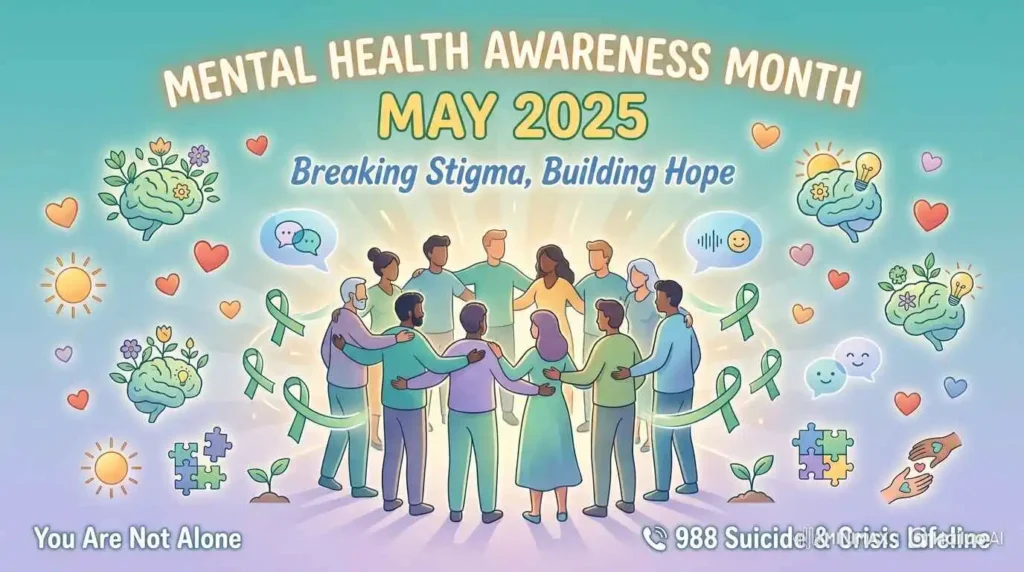
Mental health awareness saves lives every day. Understanding mental health helps reduce stigma in communities. It creates supportive environments where people feel safe seeking help. This guide covers mental health awareness month comprehensively for 2026. You'll learn when it occurs and how to participate meaningfully. Mental health matters to everyone you know. Awareness creates positive change in families and workplaces. Together we can make a lasting difference. Let's explore how mental health awareness helps us all.
Understanding Mental Health Awareness
Definition and Importance
Mental health awareness means understanding mental health conditions clearly. It involves recognizing signs and symptoms in ourselves and others. Knowing how to help someone in distress matters greatly. Mental health awareness reduces stigma and discrimination daily. It promotes open conversations about emotional wellbeing. Education strengthens communities and saves lives. Creating supportive environments helps people thrive.
Why Mental Health Awareness Matters
One in five adults experiences mental illness annually in America. Stigma prevents countless people from seeking necessary help. Early intervention dramatically improves recovery outcomes for most conditions. Awareness truly saves lives through education and support. It creates compassionate communities that understand mental health challenges. Improved access to treatment follows increased awareness. Normalizing mental health discussions changes everything for struggling individuals.
The Impact of Awareness
More people seek help when awareness increases. Discrimination decreases as understanding grows. Better workplace policies support employee mental wellness. Healthcare access improves with advocacy efforts. Stronger support systems develop in communities. Earlier diagnosis and treatment become possible. Community understanding grows year after year.
When Is Mental Health Awareness Month?
Mental Health Awareness Month 2026 Dates
Mental Health Awareness Month occurs every May annually. In 2026, it runs from May 1-31. The entire month dedicates itself to awareness and education. This marks 77 years of mental health advocacy since 1949. Mental Health America founded this important observance. The United States nationally recognizes this month. Global observance continues growing each year.
History of Mental Health Awareness Month
Mental Health Awareness Month began in the United States in 1949. Mental Health America started it when known as the National Association for Mental Health. Originally called "Mental Health Week," it later expanded. Decades of reducing stigma followed this beginning. Mental health understanding evolved significantly over time. Growing participation occurs yearly across the nation.
Clifford Whittingham Beers founded the movement behind awareness efforts. He experienced mental illness firsthand in institutions. Beers discovered widespread malpractice in mental health facilities. His advocacy transformed how society views mental health. His book "A Mind That Found Itself" remains influential today.
2026 Theme and Focus
Each year in mid-March Mental Health America releases a toolkit or materials to guide preparation for outreach activities during Mental Health Awareness Month. Themes vary yearly to address current challenges. Recent years focused on workplace and youth mental health. Specific populations receive highlighted attention. Current mental health challenges drive focus areas. Community initiatives launch throughout May.
Why May?
Spring represents renewal and personal growth naturally. This season offers hope for fresh starts. The hopeful symbolism matches awareness goals perfectly. Consistent timing aids community planning efforts. Schools remain in session for youth programs. Workplace participation becomes more feasible. Weather permits outdoor awareness events and walks.
Mental Health Awareness Day 2026
Key Dates to Know
World Mental Health Day: Date: October 10, 2026. This global observance reaches worldwide. The World Health Organization sponsors this important day. International focus unites mental health advocates globally.
Mental Health Awareness Week: Usually occurs mid-May during peak awareness activities. Intensive awareness campaigns concentrate efforts. Special events get scheduled during this week. Community participation increases dramatically.
Other Significant Days: Suicide Prevention Day falls on September 10 annually. PTSD Awareness Month occurs throughout June. Minority Mental Health Month happens in July.
How Days Differ from Month
The month provides sustained awareness over 31 days. Days and weeks offer concentrated focus on specific issues. Different organizations coordinate various observances. Themes and goals vary by event. All efforts work toward reducing stigma together.
Global vs National Observances
The US celebrates Mental Health Awareness Month in May. World Mental Health Day occurs on October 10 globally. Regional variations exist across different countries. All observances promote the same crucial goals. Coordinated efforts happen worldwide throughout the year.
Understanding Mental Health Conditions
Most Common Conditions
Depression: Persistent sadness and hopelessness characterize this condition. Loss of interest in previously enjoyed activities occurs. Changes in sleep and appetite happen frequently. This affects 280 million people globally. Depression is a highly treatable condition.
Anxiety Disorders: Excessive worry and fear dominate daily life. Physical symptoms include racing heart and sweating. Various types exist including generalized anxiety and panic disorder. Anxiety represents the most common mental health condition. Effective treatments help most people recover.
Bipolar Disorder: Mood episodes alternate between manic and depressive states. Energy and activity levels shift dramatically. Daily functioning becomes significantly affected. Lifelong management remains possible with proper treatment.
PTSD (Post-Traumatic Stress Disorder): This follows traumatic life events. Flashbacks and nightmares occur regularly. Hypervigilance affects daily activities. Treatment helps people process trauma and recover.
Eating Disorders: Unhealthy eating patterns develop over time. Body image concerns drive harmful behaviors. Various types include anorexia and bulimia. Both physical and mental health suffer. Professional treatment supports recovery.
Signs to Watch For
Persistent sadness or irritability lasting weeks. Withdrawal from previously enjoyed activities. Changes in sleep patterns or eating habits. Difficulty concentrating on daily tasks. Significant mood swings affecting relationships. Physical symptoms without clear medical cause. Thoughts of self-harm requiring immediate attention. Substance use changes indicating distress.
When to Seek Help
Take action if: Symptoms persist beyond two weeks consistently. Daily functioning becomes significantly affected. Relationships suffer from behavior changes. Work or school performance declines noticeably. Physical health shows negative impacts. Thoughts of harming yourself or others occur.
Important reminder: Seeking help demonstrates strength, not weakness. Early intervention dramatically improves recovery outcomes. Many effective treatment options exist today. Recovery remains possible for everyone.
Ways to Support Mental Health Awareness
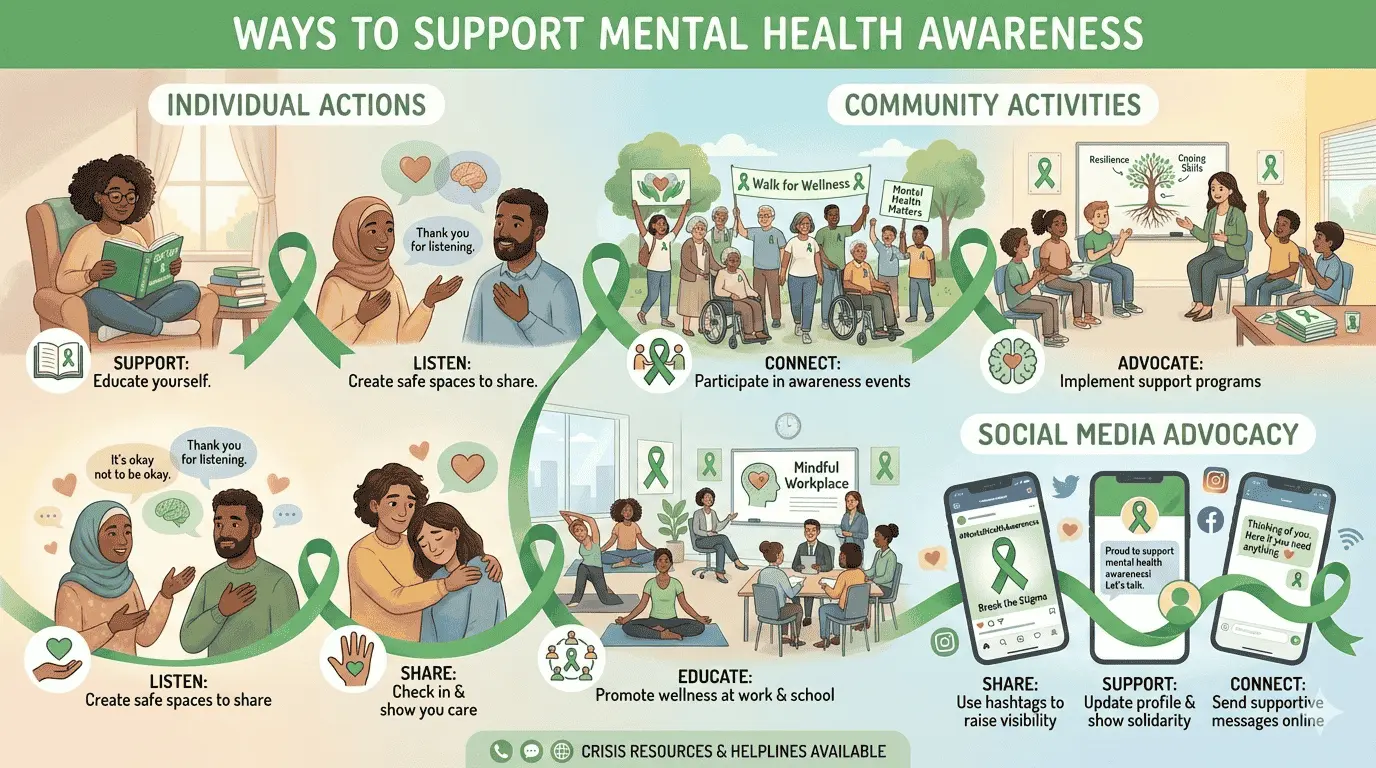
Individual Actions
Educate Yourself: Read about various mental health conditions from reliable sources. Follow reputable mental health organizations online. Attend webinars or community workshops regularly. Learn about resources available locally. Understand warning signs in yourself and others.
Share Your Story: Personal experiences reduce stigma powerfully when shared safely. Social media awareness posts reach many people. Support group participation helps others feel less alone. Speaking opportunities educate communities. Only share when comfortable and in safe spaces.
Check In on Others: Ask "How are you really?" and truly listen. Listen without judging their experiences. Offer specific, practical help when possible. Regular contact demonstrates you care deeply. Be present and patient through difficult times.
Use Supportive Language: Use person-first language saying "person with depression." Avoid stigmatizing terms that harm others. Don't use mental health terms as casual adjectives. Educate others about language respectfully. Challenge harmful stereotypes gently but firmly.
Community and Workplace Activities
Organize Events: Plan mental health awareness walks in your community. Host information fairs with local resources. Offer free mental health screening events. Organize panel discussions with experts. Provide art therapy workshops for expression. Lead yoga and mindfulness sessions. Facilitate support group meetings regularly.
Workplace Initiatives: Provide mental health training for all employees. Expand employee assistance programs significantly. Implement mental health days policy fairly. Schedule regular wellness activities. Maintain open door policies for discussions. Share resources about local support services. Conduct stigma reduction workshops quarterly.
School Programs: Hold student assemblies about mental wellness. Integrate mental health into existing curriculum. Increase counselor visibility and accessibility. Develop peer support programs among students. Organize parent education nights regularly. Provide comprehensive teacher training.
Social Media Advocacy
Share awareness graphics from trusted organizations. Use hashtags like #MentalHealthAwareness consistently. Post helpful resources with accurate information. Share crisis hotline numbers prominently. Amplify expert voices in mental health. Share personal stories only when comfortable. Always fact-check information before sharing widely.
Green Ribbon Campaign: The green ribbon officially symbolizes mental health awareness. Wear green ribbons throughout May especially. Choose green attire on awareness days. Share green ribbon images on social media. Display ribbons in profile pictures during May.
Mental Health Support and Resources
Crisis Support (24/7 Help)
If you're in crisis, help is available right now.
988 Suicide & Crisis Lifeline: Call or text: 988 Available 24 hours, 7 days weekly Free and completely confidential Trained crisis counselors answer immediately
Crisis Text Line: Text HOME to 741741 24/7 support whenever you need it Text-based help from trained volunteers
SAMHSA National Helpline: 1-800-662-HELP (4357) Treatment referrals and information services 24/7 availability year-round
Veterans Crisis Line: Call 988, then press 1 Text 838255 for immediate support Chat online at veteranscrisisline.net Veteran-specific trained support
National Organizations
Mental Health America (MHA): Website: mhanational.org Free screening tools available online Comprehensive educational resources Advocacy information and action alerts
National Alliance on Mental Illness (NAMI): Website: nami.org Support groups nationwide Education programs for families Helpline: 1-800-950-NAMI (6264)
Anxiety and Depression Association of America: Website: adaa.org Treatment information and research Support resources for families Provider directory for finding help
Online and App-Based Support
Therapy apps like BetterHelp and Talkspace connect users with licensed therapists. Meditation apps including Headspace and Calm teach mindfulness. Mood tracking apps help monitor patterns over time. Online support communities provide peer connection. Teletherapy services increase access significantly. Educational platforms offer free courses about mental health.
Local Resources
Community mental health centers serve local populations. Hospital psychiatric departments provide emergency services. University counseling centers help students and sometimes community members. Faith-based counseling offers spiritual support. Support groups through local NAMI chapters meet regularly. Sliding-scale therapists make treatment affordable.
Reducing Mental Health Stigma
Understanding Stigma
Stigma includes negative attitudes toward mental illness. Discrimination and prejudice harm people seeking help. Shame and secrecy prevent open conversations. Barriers to seeking help increase suffering. Misconceptions and stereotypes persist in society. Social isolation deepens for those struggling.
How Stigma Harms
Stigma prevents people from seeking necessary help. Treatment and recovery get delayed significantly. Isolation increases as connections break down. Employment and housing opportunities decrease unfairly. Relationships suffer from misunderstanding and fear. Quality of life reduces dramatically for many. Stigma can become life-threatening through delayed treatment.
Ways to Combat Stigma
Language Matters: Use person-first language always. Avoid casual use of diagnostic terms. Don't use words like "crazy" or "psycho." Educate others about respectful language gently.
Share Facts: Mental illness is medical, never personal weakness. Treatment works effectively for most people. Recovery happens every single day. Mental health challenges affect everyone potentially.
Challenge Stereotypes: Question media misrepresentations you encounter. Address workplace assumptions directly. Correct social misconceptions politely. Help family members understand better.
Normalize Conversations: Talk openly about your mental health. Share recovery stories when comfortable. Discuss therapy positively and naturally. Treat mental health like physical health.
Show Compassion: Listen without judging others' experiences. Offer support in practical ways. Believe people when they share struggles. Always respect privacy and confidentiality.
Prioritizing Your Mental Wellness
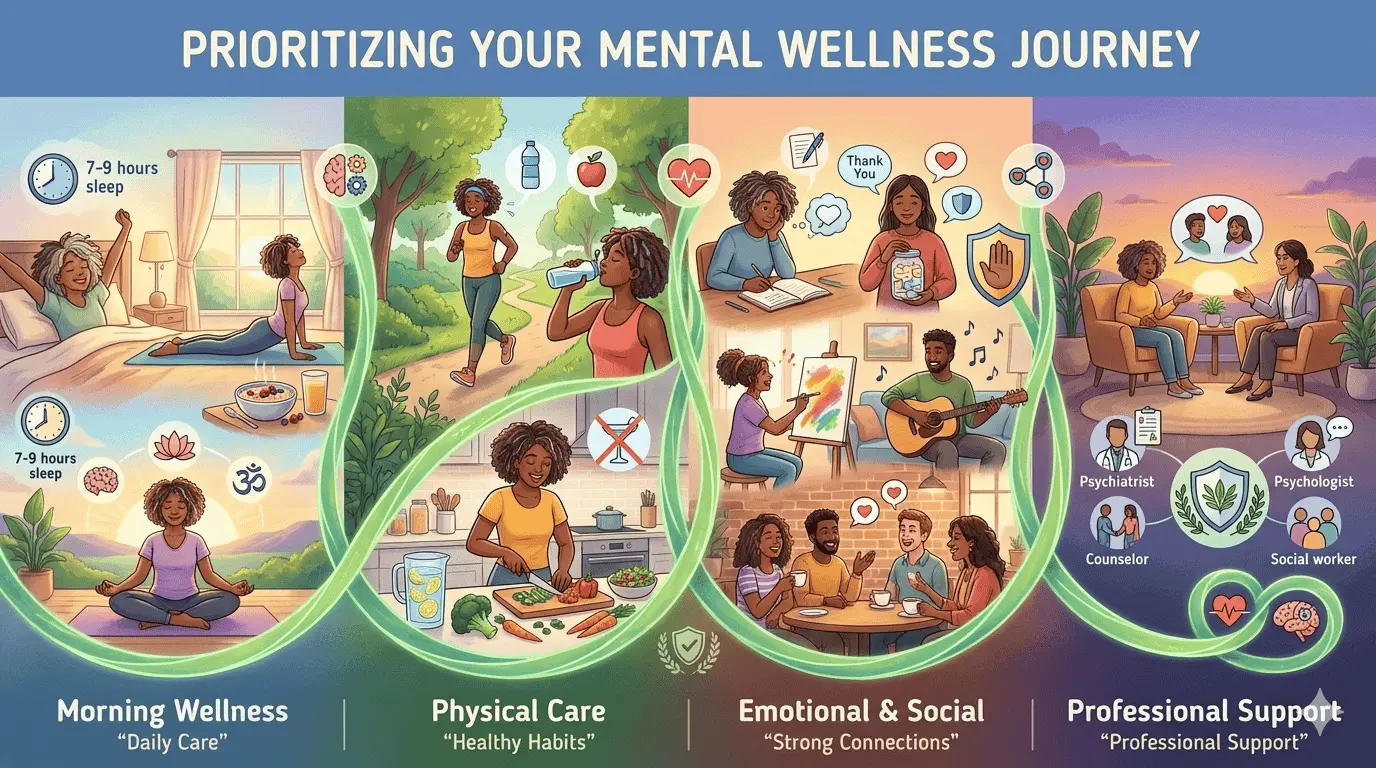
Daily Self-Care Practices
Physical Wellness: Exercise regularly for 30 minutes daily. Get adequate sleep of 7-9 hours nightly. Eat a nutritious, balanced diet. Limit alcohol and avoid substances. Stay properly hydrated throughout the day.
Emotional Care: Express your feelings in healthy ways. Practice daily gratitude for small things. Set firm boundaries with others. Engage regularly in enjoyable hobbies. Connect meaningfully with loved ones often.
Stress Management: Practice meditation and mindfulness regularly. Try deep breathing exercises when stressed. Use progressive muscle relaxation techniques. Explore yoga or tai chi practices. Spend time outdoors in nature daily.
Social Connection: Maintain meaningful relationships actively. Join community groups matching your interests. Volunteer for causes you care about. Limit social media consumption wisely. Focus on quality over quantity always.
Professional Support
When to Seek Therapy: Persistent distress affects daily life. Difficulty coping with normal stressors. Relationship problems continue unresolved. Life transitions feel overwhelming. Trauma requires professional processing. Preventive care maintains mental wellness.
Types of Mental Health Professionals: Psychiatrists are medical doctors who prescribe medication. Psychologists provide therapy and psychological testing. Licensed counselors (LPC, LMHC) offer talk therapy. Social workers (LCSW) provide counseling and resources. Psychiatric nurses specialize in mental health care.
Building Resilience
Develop healthy coping skills for stress. Build a strong support network around you. Practice effective problem-solving regularly. Maintain perspective during difficult times. Stay flexible when plans change. Learn valuable lessons from challenges faced.
Mental Health Across Communities
Youth Mental Health
One in six youth experiences mental health conditions annually. Early intervention proves critical for young people. School-based programs increase access to support. Parent education helps families support children better. Teen suicide prevention requires community action. Social media impacts youth mental health significantly.
Workplace Mental Health
Job stress affects millions of adult workers. Work-life balance remains crucial for wellness. Employer support dramatically improves employee health. Mental health days should be available without stigma. Productivity improves when mental health is prioritized. Workplace stigma must continue decreasing.
Older Adults
Senior mental health often gets overlooked entirely. Depression in older adults is common but treatable. Isolation creates significant risks for seniors. Cognitive health connects closely with emotional wellness. Late-life challenges require specific support services. Many support services specifically serve older adults.
Diverse Communities
Minority Mental Health Month occurs in July. Cultural stigma varies significantly across communities. Access disparities affect marginalized populations disproportionately. Language barriers prevent many from accessing care. Culturally competent care improves outcomes significantly. Community-specific resources serve diverse populations better.
LGBTQ+ individuals face higher rates of mental health challenges. Discrimination severely impacts emotional wellbeing. Affirming care makes tremendous difference in outcomes. Community support proves crucial for LGBTQ+ mental health.
Sustaining Mental Health Advocacy
Year-Round Commitment
Continue learning about mental health year-round. Maintain personal self-care practices daily. Stay involved with mental health organizations actively. Check in regularly with loved ones you care about. Advocate for policy changes that help people. Support mental health funding in your community.
Advocacy Opportunities
Contact your legislators about mental health issues. Support mental health legislation actively. Vote for mental health funding initiatives. Attend community meetings about mental health. Join advocacy organizations making change. Share mental health resources continuously online.
Personal Commitment
Prioritize your own mental health always. Support others consistently throughout the year. Challenge stigma in your daily life. Model healthy behaviors for others. Seek help whenever you need it. Be patient with your recovery journey.
Remember these truths: Mental health awareness isn't just for May. Every single day offers opportunities for awareness. Small actions create significant change over time. You personally can make a real difference. Community support matters more than you know. Hope and help remain always available.
Mental Health Awareness Starts With You
Mental Health Awareness Month 2026 occurs throughout May. Everyone can participate in meaningful ways. Small actions create lasting positive change in communities. Mental health awareness reduces harmful stigma and saves lives. Resources remain available 24/7 for anyone struggling. Together we create supportive communities where everyone can thrive. Your awareness and compassion matter more than you realize.
How will you participate in Mental Health Awareness Month 2026? Take the first step today: reach out to someone and ask how they're really doing. If you're struggling, please call 988 now. You are not alone. Help is available. Recovery is possible.
Frequently Asked Questions
When is Mental Health Awareness Month 2026?
Mental Health Awareness Month 2026 occurs throughout the entire month of May, from May 1-31. This annual observance has been recognized since 1949, making 2026 the 77th year of mental health awareness advocacy. Mental Health America founded this important month to raise awareness about mental health conditions and reduce stigma. Every May provides an opportunity to focus on mental wellness, share resources, and support those experiencing mental health challenges. Mark your calendar for May 2026 to participate in awareness activities.
What is mental health awareness and why does it matter?
Mental health awareness means understanding mental health conditions, recognizing warning signs, and knowing how to help yourself and others. It matters because one in five adults experiences mental illness annually, yet stigma prevents many from seeking help. Mental health awareness saves lives by encouraging open conversations, reducing discrimination, and improving access to treatment. When communities understand mental health better, people feel safer seeking support. Awareness creates compassionate environments where mental wellness is prioritized alongside physical health. Education and understanding lead to earlier intervention and better outcomes.
How can I help someone experiencing mental health challenges?
Start by asking "How are you really?" and listen without judgment. Offer specific help like preparing a meal or attending an appointment together. Regular check-ins show you genuinely care. Use person-first language saying "person with depression" rather than "depressed person." Encourage professional help by sharing resources like the 988 Suicide & Crisis Lifeline. Be patient as recovery takes time. Educate yourself about their condition from reliable sources. Avoid minimizing their experience with phrases like "just think positive." Your presence and support matter more than having perfect words.
What mental health resources are available if I need help?
If you're in crisis, call or text 988 for the Suicide & Crisis Lifeline available 24/7. Text HOME to 741741 for the Crisis Text Line. Call SAMHSA's National Helpline at 1-800-662-HELP (4357) for treatment referrals. Organizations like Mental Health America (mhanational.org) and NAMI (nami.org) offer free resources, support groups, and education programs. Many communities have local mental health centers with sliding-scale fees. Therapy apps like BetterHelp and Talkspace connect you with licensed therapists. Your primary care doctor can also provide referrals to mental health professionals.
What's the difference between Mental Health Awareness Month and World Mental Health Day?
Mental Health Awareness Month occurs every May in the United States, providing a full month of sustained awareness activities, education, and advocacy. Mental Health America founded it in 1949 specifically for the US. World Mental Health Day happens on October 10 annually and is a global observance sponsored by the World Health Organization. It unites countries worldwide in a single day of mental health focus. Both observances work toward the same goals: reducing stigma, increasing awareness, and improving access to mental health support. Together they keep mental health awareness active year-round.
What month is Mental Health Awareness Month?
Mental Health Awareness Month is May. Every year since 1949, the month of May has been dedicated to mental health awareness in the United States. Mental Health Awareness Month 2026 runs from May 1-31, providing 31 days of focused education, advocacy, and stigma reduction activities. Organizations, schools, workplaces, and communities plan special events throughout May. This consistent timing helps people plan participation activities and awareness campaigns. May was chosen partly because spring represents renewal and hope, aligning perfectly with mental health awareness goals.
When is Mental Health Awareness Day?
The primary Mental Health Awareness Day is World Mental Health Day, which occurs on October 10 every year. World Mental Health Day 2026 falls on October 10, 2026, and is observed globally with the World Health Organization's sponsorship. Additionally, Mental Health Awareness Week typically occurs in mid-May during Mental Health Awareness Month, featuring concentrated awareness activities. Some communities also observe local mental health awareness days throughout the year. While the entire month of May focuses on mental health in the US, October 10 serves as the dedicated global awareness day.
When is Men's Mental Health Awareness Month?
Men's Mental Health Awareness Month is June. This month specifically highlights mental health challenges affecting men and boys. Men face unique barriers to seeking mental health support including societal expectations about masculinity and stigma around showing vulnerability. June includes Men's Health Week and Father's Day, making it ideal for focusing on men's mental wellness. Men's Mental Health Awareness Month addresses high suicide rates among men, encouraging open conversations and help-seeking behaviors. Organizations promote resources specifically designed for men during June while emphasizing that mental health support is strength, not weakness.
What color is mental health awareness?
The official color of mental health awareness is green. The green ribbon symbolizes mental health awareness and represents hope, renewal, and growth. During Mental Health Awareness Month in May, people wear green ribbons, green clothing, and share green ribbon images on social media. Many buildings and landmarks illuminate in green during May to show support. The green ribbon campaign encourages visible solidarity with those experiencing mental health challenges. You can display green ribbons year-round, though they're especially prominent during May. Wearing green helps start conversations and reduce stigma surrounding mental health conditions.